
 Customer since 202281%
 Customer since 20233.8x
 Customer since 201930+
 Customer since 202012x
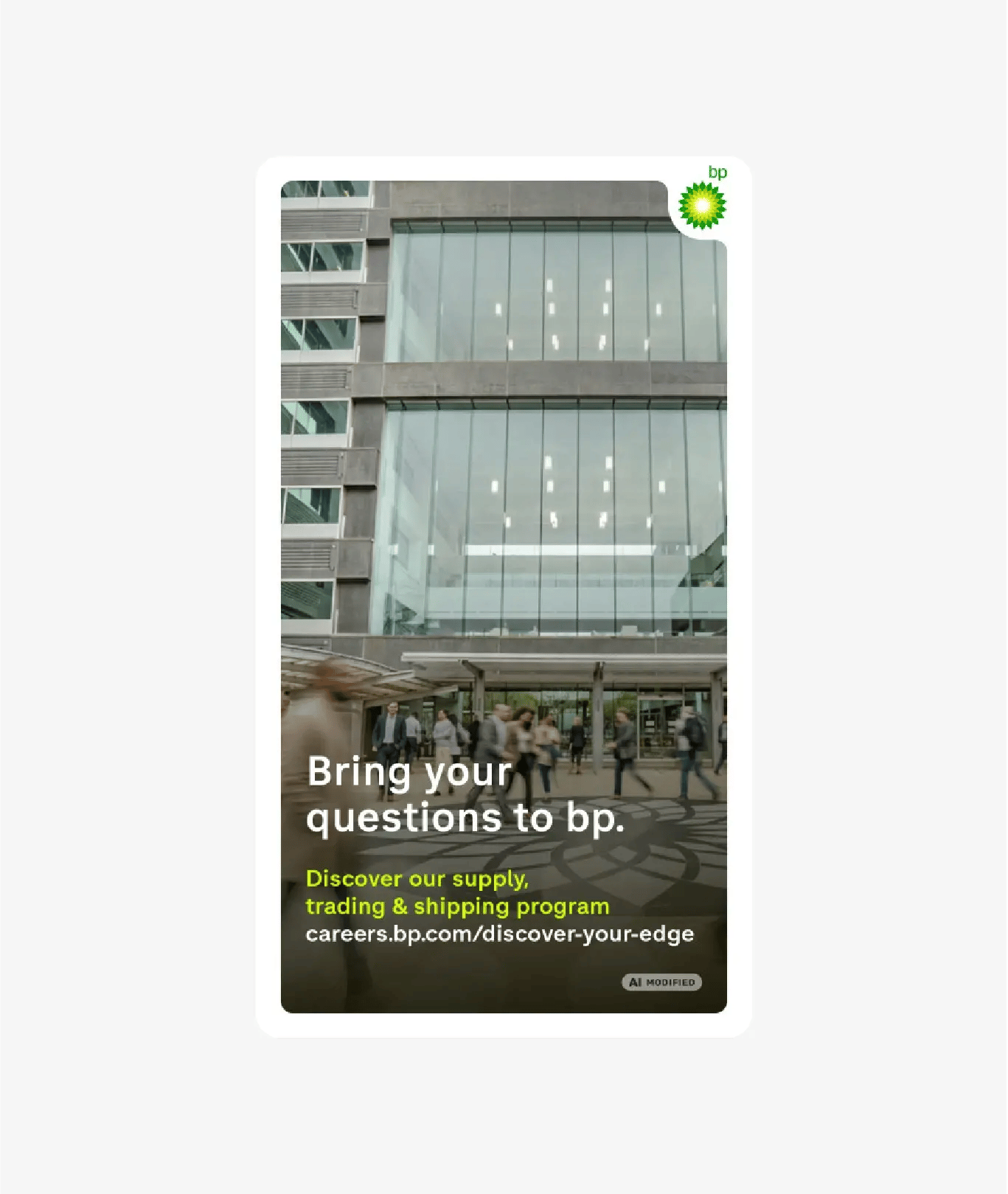
bp is one of the world’s largest energy companies, hiring across many countries, business areas and job families. In 2022, its talent attraction team set out to streamline how recruitment marketing worked across the organization.
At the time, many teams and agencies ran campaigns in parallel, each with their own tools, budgets and reports. There was no central platform, which made it hard to move fast, share what worked between markets, or see the real return on recruitment marketing spend.
The challenge: global ambition, fragmented tools
Recruitment marketing at bp’s scale means dozens of campaigns running at once, on different channels, for very different audiences: engineers, retail staff, graduates, specialists. When every region manages this separately, three problems appear.
- Slow launches. Every new campaign starts from scratch, with its own setup, approvals and agency briefings.
- No shared view. Results sit in different ad accounts and spreadsheets, so it is hard to compare markets or channels.
- Unclear return. Without a link between ad spend and hires, budgets are set by habit rather than by results.
bp’s talent attraction team wanted the opposite: one place to plan, launch and measure recruitment marketing, with clear data on what each campaign delivered.
Adopting a software-driven recruitment marketing strategy
The goal was to consolidate bp’s recruitment marketing on the SmartDreamers platform and improve visibility across every market. Instead of adding another tool, the platform replaced a patchwork of separate accounts and reports. Three changes made the biggest difference:
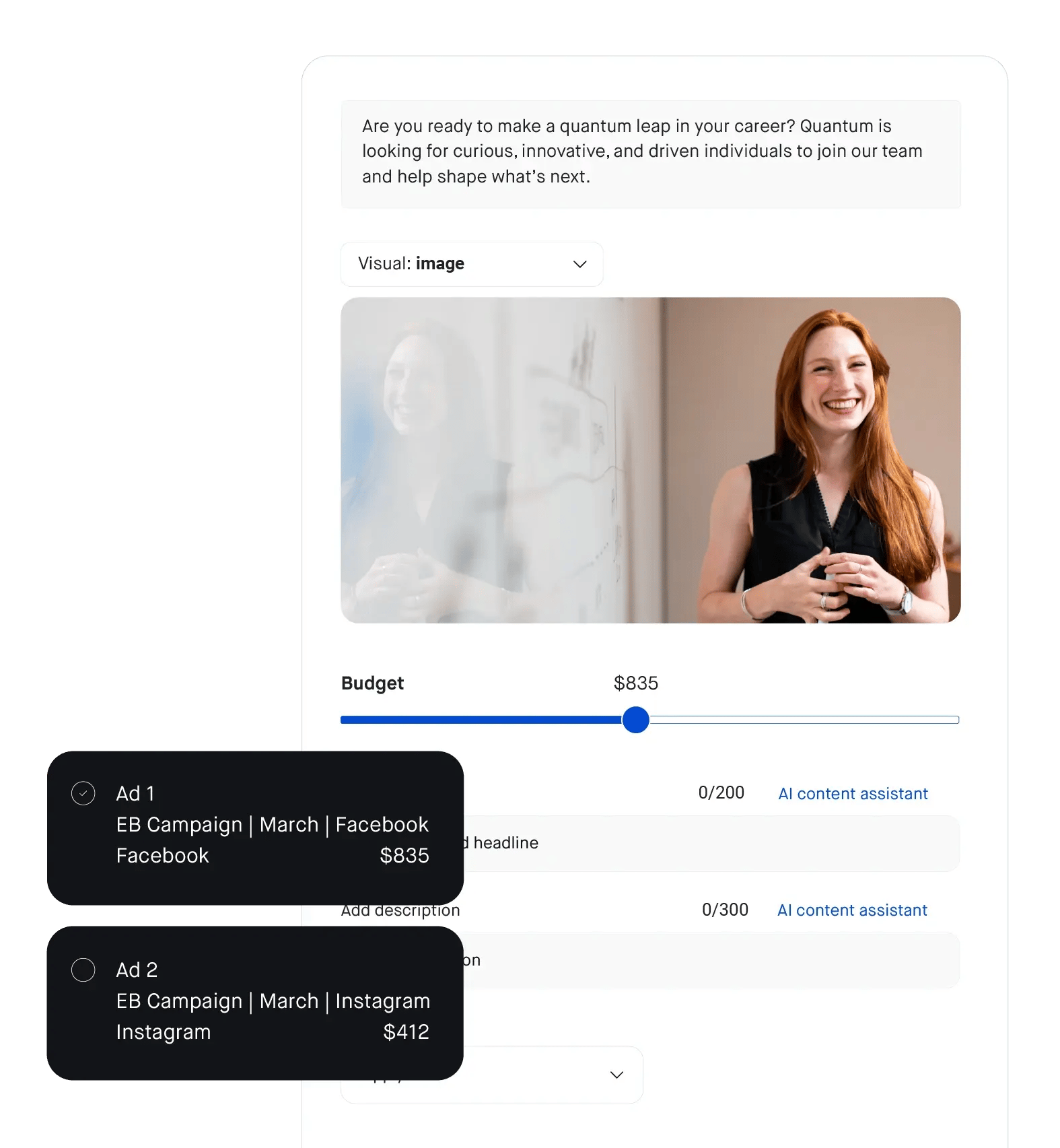
- One dashboard for every channel. Data from Facebook, Google, LinkedIn and other channels in one place, so teams compare performance side by side instead of switching between ad accounts.
- Faster campaign launches. Campaigns go live across platforms in less time, which matters when a hiring need is urgent.
- Teams working together. Recruiters in North America, Europe and Asia collaborate in one system, and a campaign that works in one market can be reused in another.
Just as important, the change moved recruitment marketing closer to the way marketing teams work: planned in advance, measured continuously and improved over time, rather than run as one-off job ads.
Measuring ROI beyond impressions and clicks
Impressions and clicks show that people saw an ad. They don’t show whether the right people applied, or whether anyone was hired. bp makes talent acquisition decisions based on data, so every first interaction needed to connect to the final hire. The reporting brings three sources together:
- Social media metrics in real time: impressions, clicks, CPC, CTR and CPM.
- Career website behavior through Google Analytics, showing what candidates do after they click.
- Hiring stages through the ATS integration, showing which campaigns lead to applications and hires.
With all three in one view, the team can follow a candidate’s path from the first ad to the final hire, and move budget toward the channels and campaigns that actually produce results.
“We base our talent acquisition decisions on data.”
Mike Jones, Global Talent Attraction Lead, bp
Consolidating global operations
bp now runs one HQ admin account that oversees 12 regional sub-accounts. The structure gives each side what it needs.
- For the global team: one view of all recruitment marketing activity, shared standards for brand and reporting, and the ability to compare regions fairly.
- For regional teams: their own space to run campaigns for local roles and audiences, without waiting on a central team for every change.
What used to be a fragmented ecosystem is now one connected system, with shared standards and local teams that can still move quickly.
The results
With one platform and full-funnel data, bp cut its recruitment marketing budget by over 80% in 2024, while clicks rose by 737.67%, applications by 85.18% and hires by 27.58%.
Spending less while getting more means every result became much cheaper. Based on these figures, the cost per click fell by about 98%, the cost per application by about 90%, and the cost per hire by about 85%.
The gains came from the same changes described above: budget moved away from campaigns that only produced clicks and toward the ones that led to applications and hires, and regional teams could reuse what already worked elsewhere.
Recruitment marketing as part of the talent strategy
For bp, recruitment marketing and employer branding are no longer one-off campaigns. They are a continuous part of the talent acquisition strategy, extending reach and helping teams hire faster around the world.
With the foundations in place (one platform, shared data and a clear link between spend and hires), the team can keep testing new channels and messages, knowing exactly what each one delivers.
We’re proud to be part of bp’s story.