



Anticipating what comes next is essential for making sound business decisions. Yet few periods in recent history have been as difficult to forecast as the present one. The rapid acceleration of AI, combined with economic and geopolitical uncertainty, has created an environment where traditional projections feel increasingly unreliable.
On one end of the spectrum, we hear that AI will fundamentally reshape how software is built, perhaps even replacing complex systems with prompt-based interfaces. On the other hand, more cautious voices warn of an imminent market correction, with AI adoption slowing as expectations collide with reality. As is often the case, the truth likely sits somewhere in between: a market correction may well occur, but AI will continue to have a meaningful and lasting impact.
Layered on top of this is a complex global context, economic volatility, geopolitical tension, and shifting labor dynamics. Navigating these waters is anything but straightforward.
So, what should we realistically expect as we look toward 2026?
First, an important caveat: every projection is shaped by perspective. Ours is informed by our work in talent acquisition technology with a focus on candidate experience, and like any viewpoint, it carries inherent bias. That’s why it’s critical to balance multiple perspectives rather than rely on a single narrative.
How AI is likely to evolve
In previous articles, we’ve taken a pragmatic view of AI, one grounded in real-world implementation rather than speculation. As we embed AI across our own platform, we see both its significant potential and its clear limitations.
AI adoption will continue to expand, but expectations will become more realistic. We are still far from a future in which AI fully manages the recruitment lifecycle end to end, from sourcing and selection to interviewing and final decision-making. Human judgment, context, and accountability remain central to hiring, and that is unlikely to change in the near term.
At the same time, broader economic forces will influence how AI is adopted. A potential market correction will almost certainly lead to a recalibration of AI investments. Over the past few years, many organizations rushed to implement AI solutions without a clear return on investment. That phase is coming to an end.
By 2026, AI adoption will be more disciplined. Budgets will still be allocated, but purchasing decisions will be driven by measurable outcomes rather than experimentation alone. If 2025 was characterized by rapid adoption with limited ROI scrutiny, 2026 will likely mark a shift toward fewer initiatives—but ones that are more tightly aligned with business impact.
Will hiring actually get easier?
A common assumption is that a slowing economy leads to a larger pool of qualified candidates. In theory, reduced hiring and workforce reductions should make recruitment easier. In practice, the picture is far more complex.
Recent economic behavior has already challenged conventional models. For example, despite sustained efforts to cool the labor market through higher interest rates, unemployment has remained unexpectedly low. Historical correlations between macroeconomic indicators no longer hold as reliably as they once did.
As a result, predicting hiring conditions with confidence has become increasingly difficult. In 2026, talent acquisition teams should expect continued volatility rather than a clear return to “employer-driven” or “candidate-driven” markets. Flexibility, speed, and strong employer branding will remain critical differentiators, regardless of broader economic signals.
Software stack consolidation: reality and nuance
One of the dominant themes of 2025 has been consolidation, driven by increased M&A activity across HR and talent technology. However, consolidation does not look the same across all segments of the market.
In large enterprises, consolidation has been underway for years. Organizations are streamlining vendor stacks, reducing overlap, and prioritizing tighter integrations. This trend is likely to continue.
The SME market, however, tells a different story. Here, innovation remains dynamic, with new vendors entering the space at a steady pace and targeting increasingly specific use cases. While some consolidation will occur, it is unlikely to eliminate diversity in this segment.
It’s also important to recognize the trade-off inherent in consolidation. Markets dominated by a small number of players often struggle to innovate. Healthy ecosystems depend on the emergence of specialized solutions that challenge incumbents and push the industry forward.
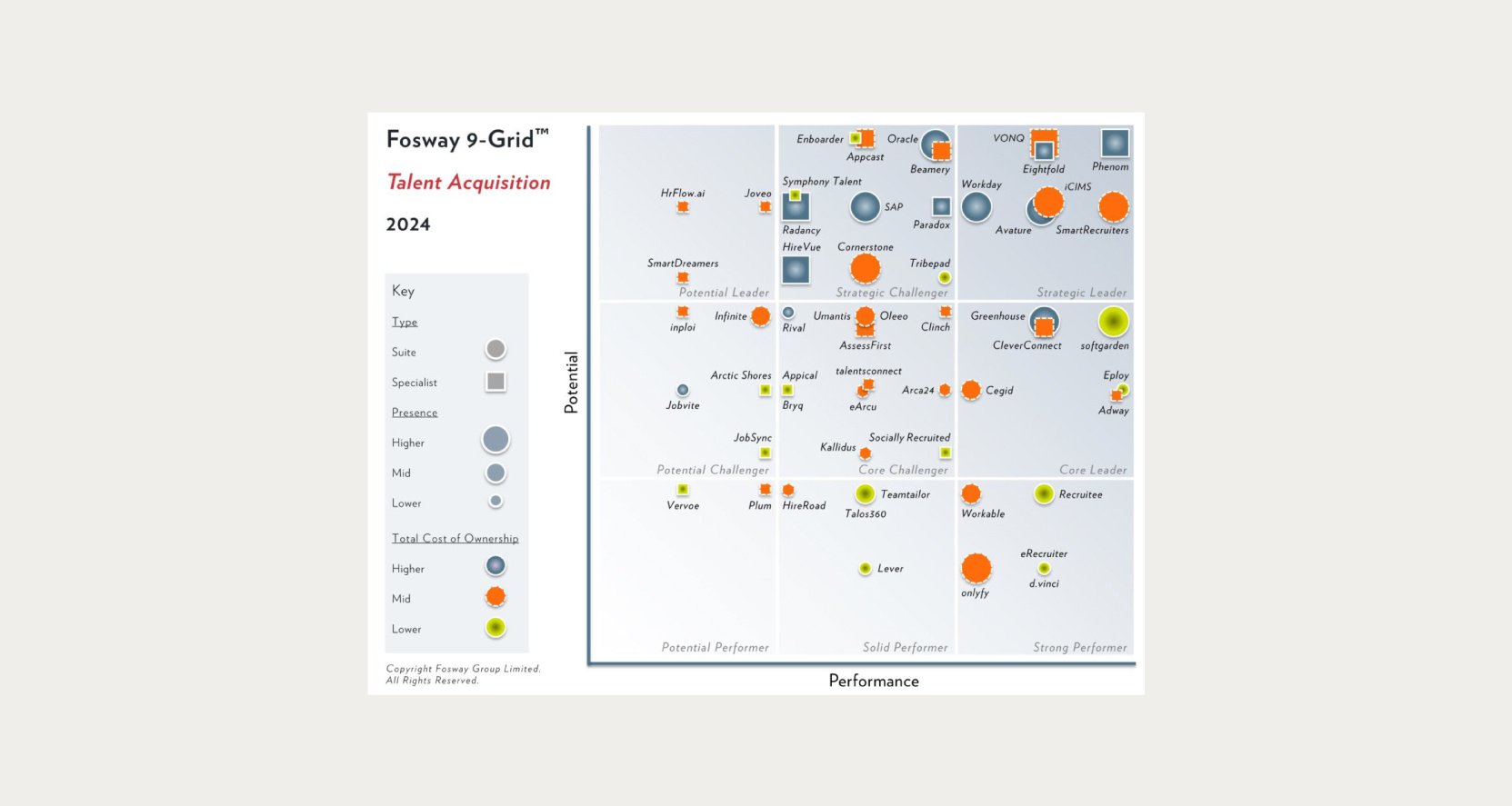
Looking ahead to 2026, we expect both forces to coexist: continued consolidation at the enterprise level, alongside the emergence of new, focused players bringing fresh ideas and innovation to the talent acquisition landscape.
Candidate experience will become a measurable business metric
For years, candidate experience has been discussed as an important but largely qualitative concept, something organizations aimed to “improve,” without always being able to define or measure what success actually looked like.
As hiring remains competitive and candidate expectations continue to rise, experience will increasingly be treated as a measurable business metric, directly linked to outcomes such as conversion rates, time to hire, cost per hire, and employer brand perception. In practice, this means that organizations will move beyond anecdotal feedback and start managing candidate experience with the same rigor they apply to marketing or sales funnels.
Career sites, application flows, and communication touchpoints will be evaluated based on clear performance indicators: page engagement, drop-off rates, form completion, response times, and re-engagement potential. Friction in the candidate journey will no longer be tolerated as an unavoidable side effect of hiring complexity, but identified, quantified, and optimized.
Final thoughts
Rather than dramatic shifts or singular outcomes, 2026 is likely to be defined by recalibration. AI will remain central, but adoption will become more intentional. Hiring conditions will continue to defy simple forecasts. And the technology landscape will balance consolidation with ongoing innovation.
For talent acquisition leaders, success will come not from predicting the future with certainty, but from building systems, teams, and strategies that can adapt as conditions evolve.